Finding accurate information feels impossible right now, which is exactly why a beginner news research guide for teachers is so necessary. You want your students to understand current events without falling into bias traps or reading pure fiction. I have spent hours staring at search results wondering if a source was actually credible. This process takes the stress out of building your next lesson plan entirely.
Start with Lateral Reading
Many educators make the mistake of staying on a single webpage to figure out if it is trustworthy. You read the “About Us” page and assume the authors are telling the absolute truth. The smartest thing you can do is leave that tab immediately. Open a new window and search for what other reputable sites say about that specific organization.
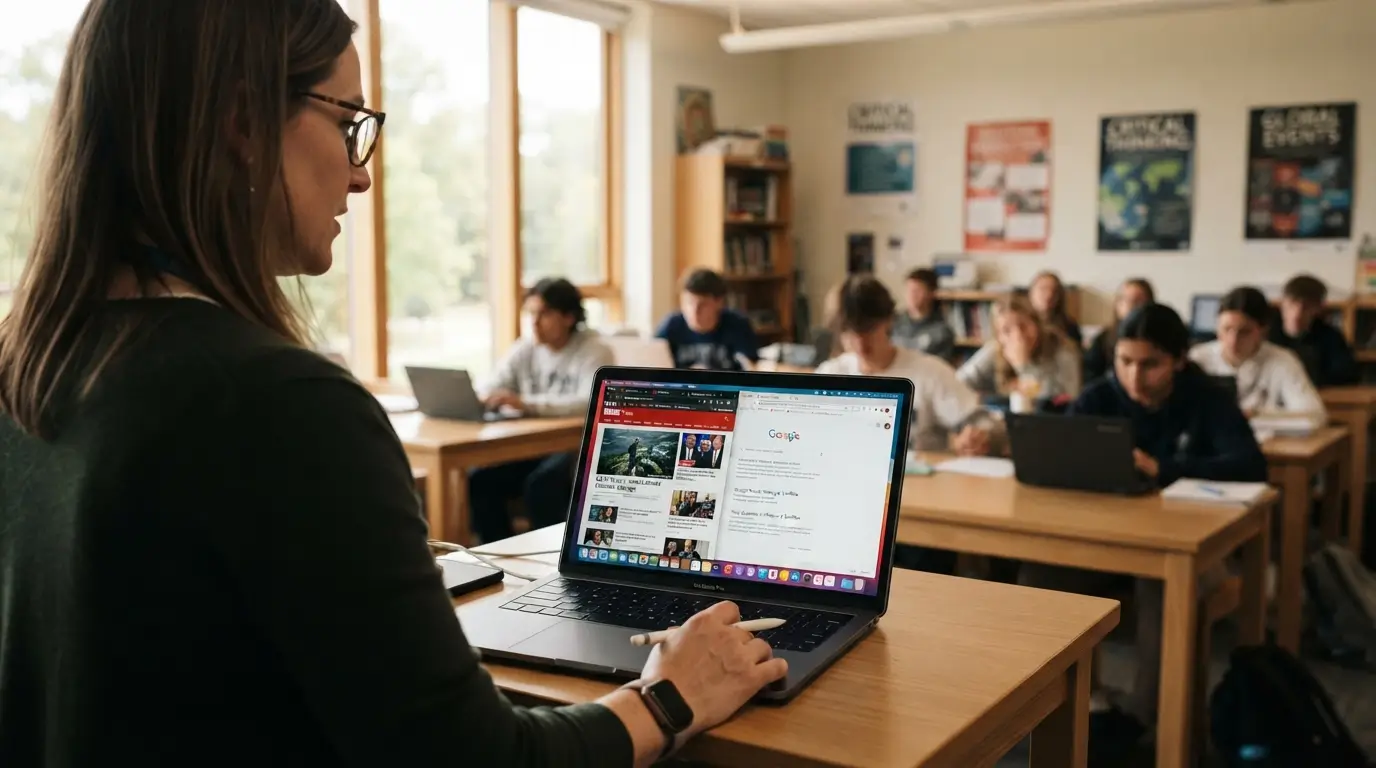
This strategy is called lateral reading, and Stanford researchers found it is the fastest way to verify a site. If a group has a history of publishing hoaxes, a quick search will reveal it almost instantly. You save so much time by letting other experts do the heavy lifting for you. I used to spend twenty minutes dissecting a single article with my class. Now, I spend two minutes googling the publisher instead. Practicing lateral reading completely speeds up your classroom prep and keeps bad information away from your students.
Trace Quotes Back to Their Origin
Reading a compelling quote in an article does not mean the journalist actually heard the person say it. News outlets constantly aggregate content from other publications to churn out articles faster. You will often see a tiny hyperlink leading to the original interview or press release. Click that link immediately. You want to see the full context of what was said before handing a printout to a room full of teenagers. Politicians and public figures get misquoted constantly by aggregators trying to write a catchy headline.
Sometimes a ten-minute speech gets sliced into a highly misleading ten-second video clip. Finding the primary source ensures your students analyze the real message. I once built a whole civics assignment around a quote that turned out to be chopped in half, which was highly embarrassing. Going straight to the original video prevents you from looking foolish. Tracking down primary sources is always your best option.
Bookmark Dedicated Fact-Checking Platforms
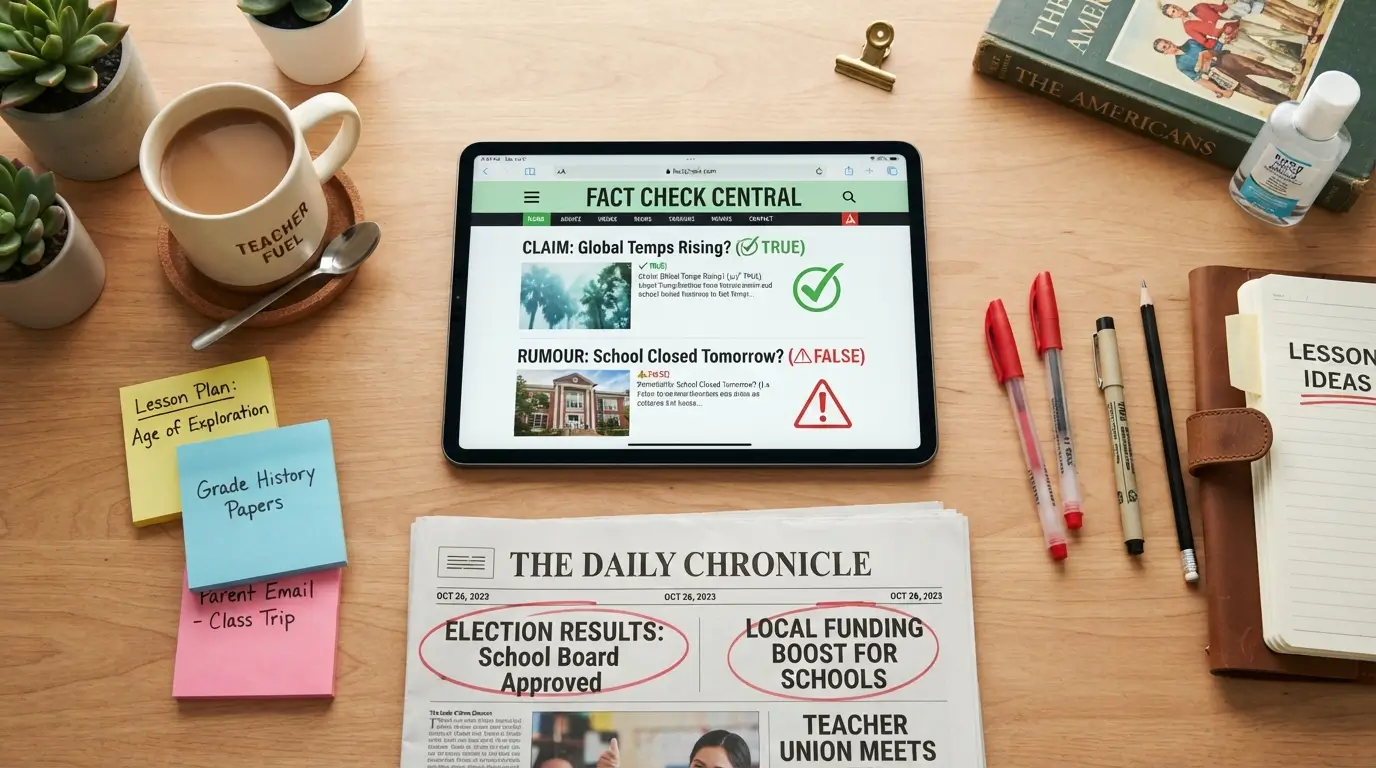
Do not try to be a lone detective when professional journalists have already solved the mystery. Sites like Snopes, PolitiFact, and FactCheck.org exist specifically to debunk viral rumors and misleading statistics. Keep these sites pinned to your browser bookmarks for incredibly quick access. When a student brings up a wild story they saw on TikTok, you can run a quick search on one of these platforms. Showing them how easily a professional debunks a claim is a powerful teaching moment.
You are modeling good digital citizenship live in the room. Just remember that no fact-checker is perfect, so cross-reference a few different platforms if a claim feels tricky. Adding these platforms to your daily routine gives you an immediate backup plan during heated classroom debates. Keeping a folder of fact-checking tools handy makes you look like an internet wizard.
Investigate Funding and Ownership
Understanding who pays the bills for a media outlet tells you a lot about their potential bias. Some flashy news sites are secretly funded by lobbying groups or corporate think tanks pushing a specific agenda. You can usually find this information by searching the publication name alongside words like “funding” or “board of directors”. Nonprofits have to disclose their major donors in tax filings, which watchdog groups often summarize online for the public.
If an oil company funds an environmental news blog, your students absolutely need to know that detail before reading their articles. The same goes for local news stations quietly bought out by massive national conglomerates. This step might feel slightly tedious at first. It becomes second nature once you do it a few times. Knowing the financial backing of a source completely changes how you interpret their reporting.
Build a Classroom Whitelist
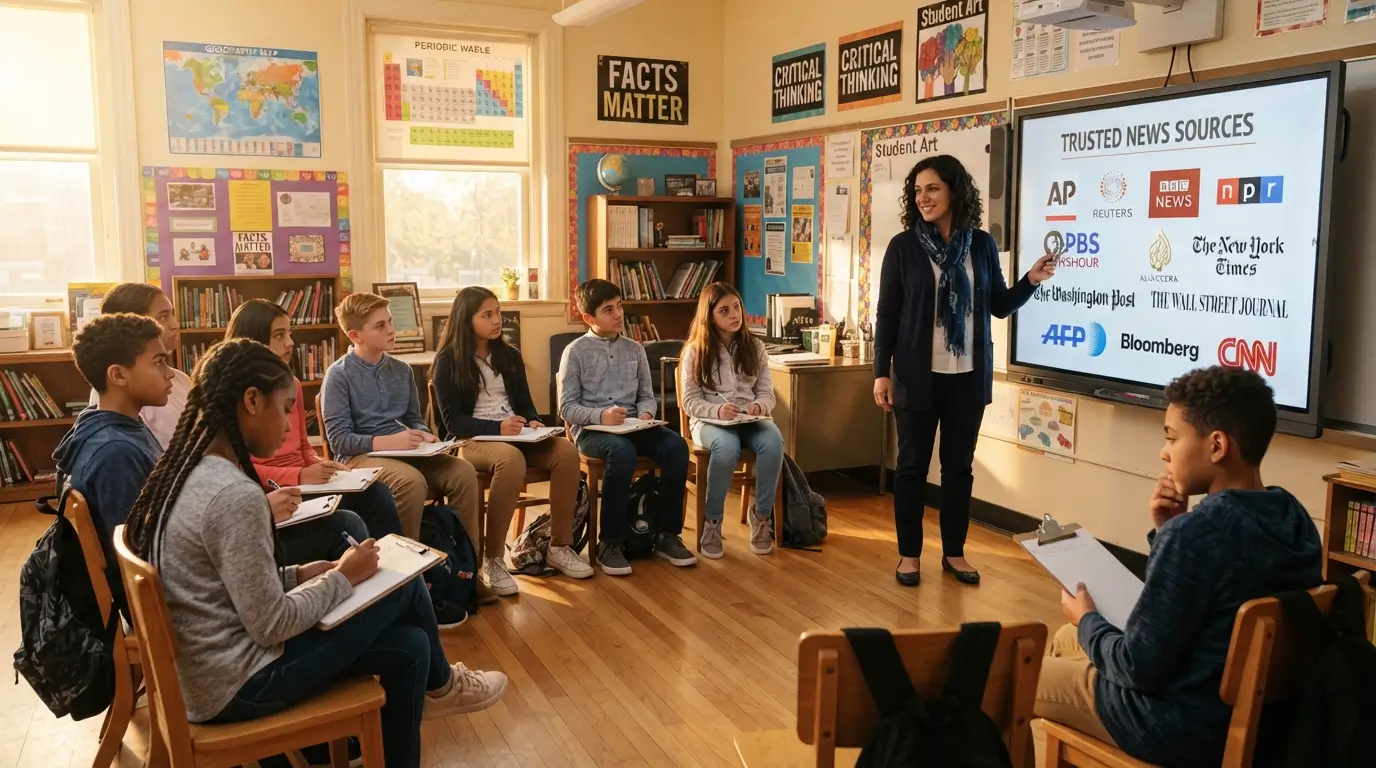
Vetting every single article before the morning bell rings is completely exhausting. You need a pre-approved list of websites that consistently publish accurate, well-sourced information. Sit down on a Sunday afternoon and compile a list of five to ten outlets you trust implicitly. Include major wire services like the Associated Press or Reuters because they prioritize straight facts over commentary. Share this list with your class and require them to use only these sites for their first few research projects.
Restricting their options early on builds a solid foundation for their media literacy skills. They can branch out later once they know what a reliable article actually looks like. A good beginner news research guide for teachers always includes building a whitelist to keep students on track. Having a curated whitelist saves you from grading papers filled with absolute nonsense.
Teach the Difference Between Opinion and Reporting
Major newspapers publish brilliant investigative journalism right next to highly subjective opinion columns. Students rarely notice the tiny “Opinion” tag sitting at the top of the webpage, so you have to explicitly show them where to look. Explain that reporters get paid to find facts, while columnists get paid to share their feelings about those exact same facts. I like to pull up a hard news story and an editorial covering the exact same event.
Also Read: Simple News Explainers for Adult Learners 2026
We put them side by side on the smartboard and highlight the emotionally charged adjectives in the opinion piece. The contrast is usually shocking to them, especially when they realize how cable news pundits operate compared to news anchors. Recognizing the difference prevents them from citing a highly biased rant as objective truth. Pointing out opinion labels is a quick fix with massive long-term benefits.
Utilizing a Beginner News Research Guide for Teachers Daily
Putting these steps into practice might feel overwhelming when you already have a massive workload. That is why following a beginner news research guide for teachers is so incredibly useful. You do not have to memorize every single media literacy concept overnight. Just pick one strategy and focus on it for an entire week. Maybe you spend this week teaching your class how to spot sponsored content hidden in a news feed.
Next week, you can tackle how to reverse image search a viral photo to see if it was manipulated. Breaking the process into tiny chunks keeps everyone engaged without causing unnecessary frustration. You can even collaborate with your school librarian to reinforce these exact same lessons during library time. Your students will start catching fake news on their own after just a month of practice. Sticking to a structured framework gives your classroom a clear path forward.
Keep a Running Document of Bad Sources
Creating a wall of shame for terrible websites is surprisingly fun and highly educational. Every time you or a student finds a site publishing fake news, add it to a shared Google Doc. Write down the name of the site, the lie they told, and how you figured out it was completely fake. This document becomes a living warning sign for future assignments. Students actually love contributing to it because it feels like they are catching adults in a lie.
I have seen kids get weirdly competitive about who can find the most ridiculous hoax site or AI-generated article. This blacklisting activity is a core part of any beginner news research guide for teachers because it gets kids actively involved. It turns a boring research requirement into an active investigation. A shared blacklist builds a collaborative culture of deep skepticism in your room.
Frequently Asked Questions
How do I introduce a beginner news research guide for teachers to my staff?
Start by sharing a few simple strategies during your next department meeting. Show your colleagues how quickly lateral reading works on a projector. Giving them a practical demonstration makes the concept feel accessible and completely doable. They will immediately see the massive value for their own weekly lesson planning.
What is the best way to handle a student citing fake news?
Never embarrass the student in front of the entire class. Pull them aside privately and ask them to walk you through how they found the article. Guide them toward checking the source’s credibility using the tools you practiced together. Turning the mistake into a gentle investigation builds trust instead of defensiveness.
Are Wikipedia pages acceptable for classroom research projects?
Wikipedia is actually a fantastic starting point for almost any research project. Teach your students to scroll down to the reference section at the very bottom of the page. Those cited links usually lead to highly credible primary sources. It should never be the final citation, but it is incredibly useful.
How much time does vetting news sources actually take daily?
It takes a few extra minutes upfront, but it prevents hours of grading headaches later. Once you memorize which major outlets are reliable, you barely have to think about it. Training your students to do the vetting themselves also takes a massive portion of the heavy lifting off your shoulders.
Can younger students grasp advanced media literacy skills?
Absolutely. Elementary and middle school students are surprisingly quick at grasping these core concepts. You just have to adapt the vocabulary slightly. Instead of talking about corporate funding, discuss who wrote the story and what they want the reader to feel. Start small and build their critical thinking muscles early.
Conclusion
Navigating the media landscape with your students does not have to be a frustrating experience at all. Building solid routines around source checking empowers both you and your classroom to seek out the truth confidently. What is the very first news topic you plan to research with your students this week?
One thought on “Beginner News Research Guide for Teachers 2026”