
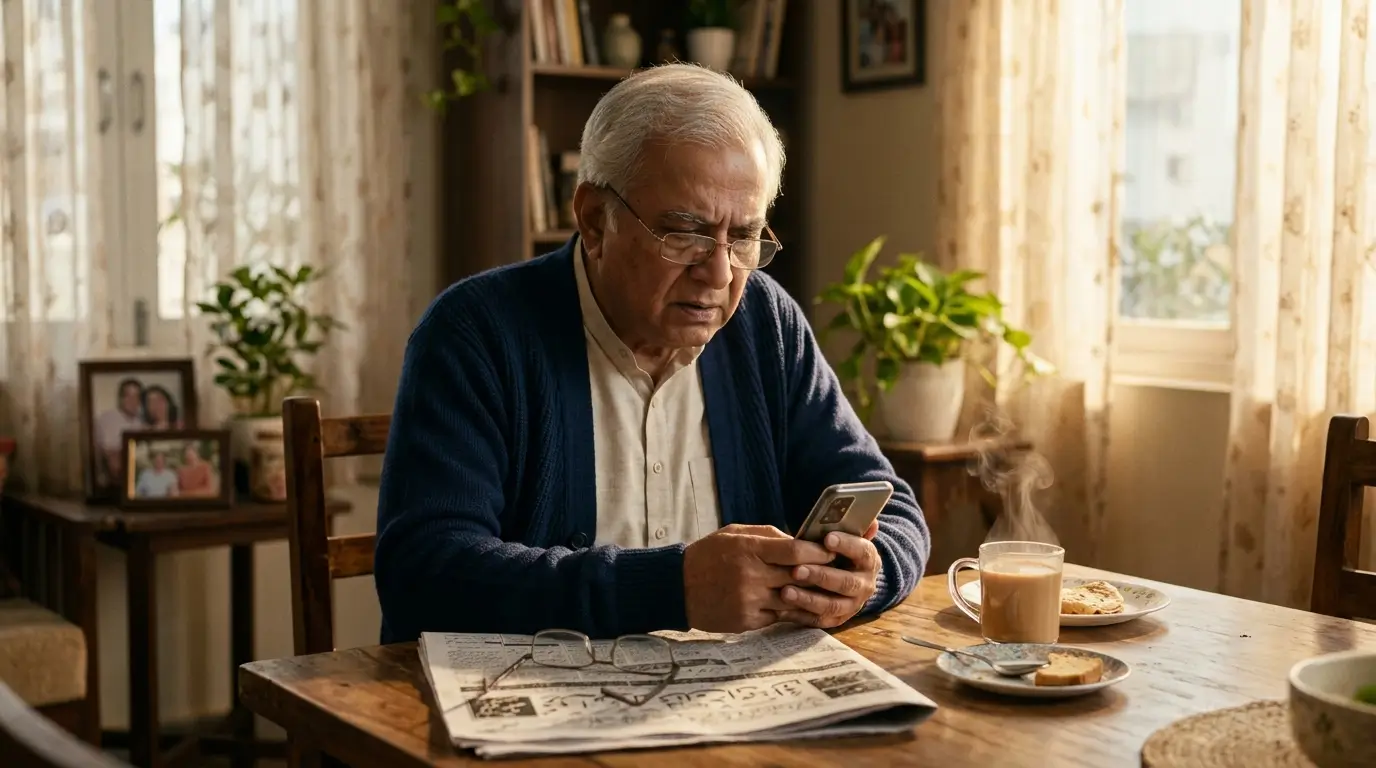
Top news fact checking methods for retired seniors matter when a shocking headline appears on your phone before breakfast. A message from an old friend claims the government has announced a new pension benefit, or a video warns that banks will freeze accounts tomorrow. I know how tempting it feels to share something that might protect someone, but a quick check can save you from spreading a costly mistake.
Why Retired Seniors Need Reliable News Checks
Retirement brings more time to follow the news, reconnect with friends, and keep up with family conversations. It also means you may receive a steady stream of headlines about pensions, healthcare, inflation, politics, and public safety. Some stories deserve your attention, while others use fear or excitement to grab it.
The trouble often starts with a familiar name or a trusted sender. A message from a relative can still contain an old rumor, and a professional-looking news graphic can still misrepresent an event.
The best fact-checking habit does not require expensive software or technical knowledge. You need a little patience, a few trustworthy sources, and the confidence to ask where a claim came from before you believe it or forward it.
1. Start With the Original Source, Not the Headline
A headline might say, “Government Announces New Pension Increase for All Retirees.” Before celebrating or worrying, look for the official announcement behind the story.
If the news concerns a pension, visit the relevant government department’s official website. In Pakistan, for example, check the Finance Division or the relevant provincial government department for official notifications. If a story concerns a bank, look for a statement from that bank or the State Bank of Pakistan.
A genuine announcement usually provides a date, a responsible department, and details about who qualifies. A vague message that says “Everyone will receive extra money next week” deserves more scrutiny.
My favorite simple rule: If a story promises money, demands urgent action, or threatens a penalty, never rely on the headline alone. Read the original announcement before making a financial decision.
2. Check the Date Before You Believe the News
Old news often returns to WhatsApp and Facebook with a fresh caption. A pension increase from several years ago might circulate again as though officials announced it yesterday. A photograph of an old flood or political rally might also appear beside a completely unrelated current event.
Look for the publication date near the headline. Then check whether the article mentions a specific year, month, or event.
For example, if a message claims that a new healthcare policy starts next Monday, search the policy name and the current year. You might find an original announcement from an earlier administration.
Google can help you search for an exact headline or phrase. Add the year to your search, and compare the results with the original article.
Also Read: Easy News Literacy Guide for New Parents 2026
Don’t assume that a story becomes false simply because it is old. Some older information remains useful. The important question is whether someone presents it as a new development when nothing has changed.
3. Compare Two or Three Trusted News Sources
One news website may miss an important detail, misunderstand a statement, or publish an early report that later changes. Reading another reliable source helps you see whether the central facts agree.
For major national or international news, compare reports from established outlets such as Reuters, BBC News, and Dawn. For Pakistan-specific claims, Soch Fact Check also investigates viral statements, political claims, and misleading images.
You don’t need to read ten articles about every story. Two or three independent reports often give you a useful starting point.
Pay attention to the actual evidence, not just the number of websites repeating a claim. Five websites may copy the same unverified social media post. That does not make the claim five times more reliable.
A useful comparison asks:
-
Do the reports agree about the date, location, and people involved?
-
Does at least one report link to an official document or recording?
-
Does one article include a correction or a detail that others missed?
If the reports disagree, wait for more information instead of picking the version that sounds most convincing.

4. Examine Viral WhatsApp Messages Carefully
WhatsApp forwards often look personal and urgent. Someone might write, “My cousin works at the hospital, and she says this medicine is being banned tomorrow.” The sender may genuinely believe the message, but that does not establish its accuracy.
Before forwarding a claim, check whether the message names a hospital, government agency, news outlet, or date. Search for those details separately rather than copying the entire message into a search engine.
In Pakistan, you can also use Soch Fact Check to examine questionable claims circulating on social media and messaging platforms. Its published methodology describes checking reliable sources, contacting relevant people or institutions, and examining suspicious images or videos.
A particularly useful habit is to send the original link instead of a screenshot whenever possible. A link lets your friends read the full report, including the context that a cropped image might hide.
5. Reverse-Search Photographs and Videos
A dramatic photograph can make a false story feel completely believable. A picture of a crowded hospital, a damaged building, or a politician speaking at a rally may be genuine, yet the caption might describe a different country or year.
Try a reverse image search with Google Lens. On a smartphone, open the image in Google Photos or use the Google app’s Lens feature, depending on your device. You can also upload an image to a reverse-search service such as TinEye.
The search may reveal an older article featuring the same photograph. Compare the original caption, publication date, and location with the new claim.
For videos, look for the earliest available upload and examine visible details such as road signs, building names, weather, and language. A short clip rarely provides enough context to establish everything that happened before or after the recording.
These checks can expose misleading captions, but they have limits. A reverse search that finds no match does not prove that an image is authentic. It simply means you haven’t found an earlier copy.

6. Look for the Evidence Behind Statistics and Big Claims
News stories about inflation, unemployment, pension payments, and public health often include numbers that sound impressive. A message might claim that grocery prices have doubled in one month or that a certain benefit covers every retired person.
Check the original report from the institution responsible for the figures. For Pakistani economic news, official sources may include the Pakistan Bureau of Statistics, the State Bank of Pakistan, or the relevant ministry.
Read the small details around the number. Does it describe one city or the entire country? Does it compare prices with last month or last year? Does it cover every pensioner or only a particular category?
These distinctions matter. A price increase in one market does not automatically represent the whole country, and an announced pension adjustment may apply only to specific employees or retirement dates.
If a report gives no source for its numbers, treat the claim as unverified until you find supporting evidence.
7. Use Fact-Checking Websites Without Treating Them as Infallible
Fact-checking organizations can save time, especially when a rumor spreads quickly. They often investigate claims, explain their evidence, and publish a clear verdict.
For readers in Pakistan, Soch Fact Check is a useful resource for local political claims, viral videos, and misinformation in Urdu or English. Another option is MediaCheck PK, which offers tools for analyzing articles, screenshots, and WhatsApp messages.
Still, a fact-checking tool should support your judgment, not replace it. Some online tools use artificial intelligence to analyze claims. AI can misunderstand a statement, rely on outdated information, or produce a confident answer without sufficient evidence.
Read the explanation behind a verdict. Check its sources and publication date. If a tool labels a claim false but provides no convincing evidence, look for another reliable source before reaching a conclusion.
8. Pause Before Sharing Something Alarming
A short pause is often the most useful of all top news fact checking methods for retired seniors. Fraudsters and rumor spreaders frequently rely on urgency, fear, anger, or excitement to push people into acting without thinking.
A message that says “Share this with every pensioner before midnight” should make you slow down. The same goes for claims about bank closures, medicine shortages, missing children, or sudden government penalties.
Before forwarding anything, ask yourself whether sharing it could frighten someone, damage a person’s reputation, or encourage a risky financial decision.
If you cannot confirm the claim, you can simply leave it alone. You do not owe every forwarded message a response, and you certainly don’t need to become the family news desk.

FAQs
What is the easiest way for a retired senior to fact-check breaking news?
Start with the date and source. Search the headline, find the original announcement if one exists, and compare the claim with another established news outlet. If the story involves money, health, or personal safety, avoid acting until you confirm the details through an official source.
Which websites can seniors use to check news in Pakistan?
Soch Fact Check investigates misinformation and viral claims, including local political stories and misleading photographs. Dawn, Reuters, and BBC News provide additional reporting for comparison. For government announcements, check the relevant official department rather than relying only on a news summary.
Can I trust a news story that several websites have shared?
Not automatically. Several websites might repeat the same unverified claim without checking its origin. Look for independent reporting, original documents, named sources, and consistent details. If every report traces back to one anonymous message, the claim still needs verification.
How can I check whether a WhatsApp news message is fake?
Search a distinctive sentence from the message, check its date, and look for an original source. If it contains a photograph, try Google Lens to see whether the image appeared in an older story. When evidence remains unclear, avoid forwarding it as confirmed news.
Are AI fact-checking tools reliable for older adults?
AI tools can help identify questionable claims and organize information, but they sometimes make mistakes or use outdated facts. Treat their verdicts as a starting point. Check the original sources, particularly for pension rules, healthcare decisions, and other matters that could affect your finances or wellbeing.
Conclusion
Good news habits don’t require a journalism degree or hours spent online. A few careful checks, a trusted source, and the willingness to wait can help you separate useful information from rumors that only create worry. The next time a surprising headline reaches your phone, give yourself permission to check it before you share it.
One thought on “Top News Fact Checking Methods for Retired Seniors 2026”