You just had a baby, and suddenly every notification on your phone screams that something your pediatrician told you is completely wrong. That panic is real, and it is exactly why an easy news literacy guide for new parents matters more than you think. You do not need a journalism degree to figure out which headlines deserve your attention and which ones are just noise.
Check the Source Before You Share That Headline
When my daughter was three weeks old, I almost forwarded a terrifying article about crib safety to every parent I knew. Then I noticed the website was called “HealthyBabyTruth.net” and had been registered two months prior. That stopped me cold. The first thing you should do with any alarming parenting headline is tap on the source. Look at the URL, check the “About” page, and see if actual journalists or medical professionals run the site.
Legitimate outlets like the American Academy of Pediatrics or Reuters Health have editorial standards and real fact-checkers on staff. Random blogs monetized by affiliate links do not. I also check whether the author has a byline and any listed credentials. Anonymous articles about infant health should raise a red flag immediately. A quick thirty-second check saves you from spreading panic that was never based on real evidence in the first place. Trust me, your mom group will thank you later.
Read Past the Headline, Especially the Scary Ones
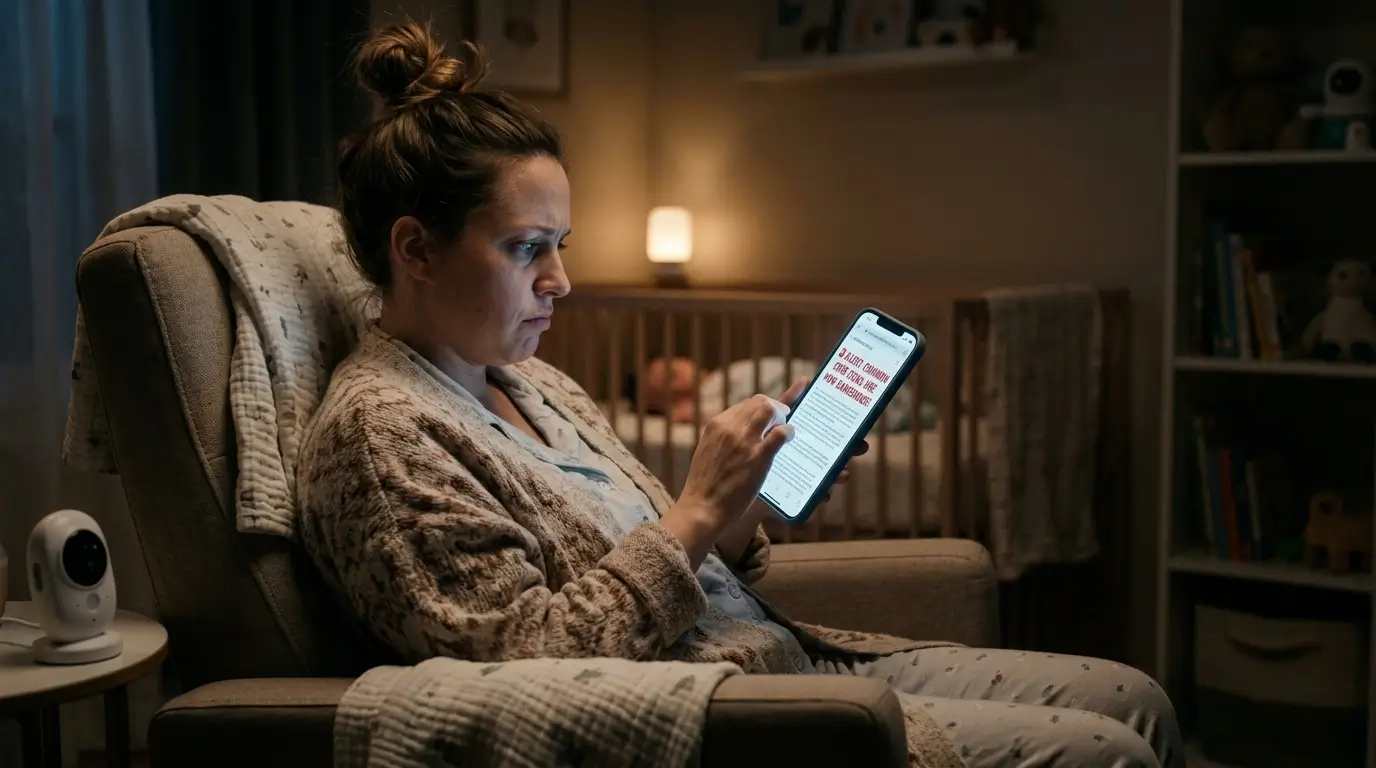
Headlines exist to get clicks, not to inform you. I learned this the hard way when a notification told me “New Study Links Baby Formula to Developmental Delays.” My heart dropped. I clicked. The actual article buried in paragraph six mentioned the study involved rats, not human infants, and the sample size was twelve. Twelve rats.
The headline was technically not a lie, but it was deeply misleading. Get in the habit of scrolling past the first bold line and reading at least the opening three paragraphs before you react. If the article references a study, see whether the findings actually match what the headline claims. Most of the time, the nuance lives in the details that editors intentionally left out of the title to maximize engagement. FYI, this applies to email subject lines too. My inbox is full of newsletters that use the same bait-and-switch tactic.
An Easy News Literacy Guide for New Parents Starts With Dates
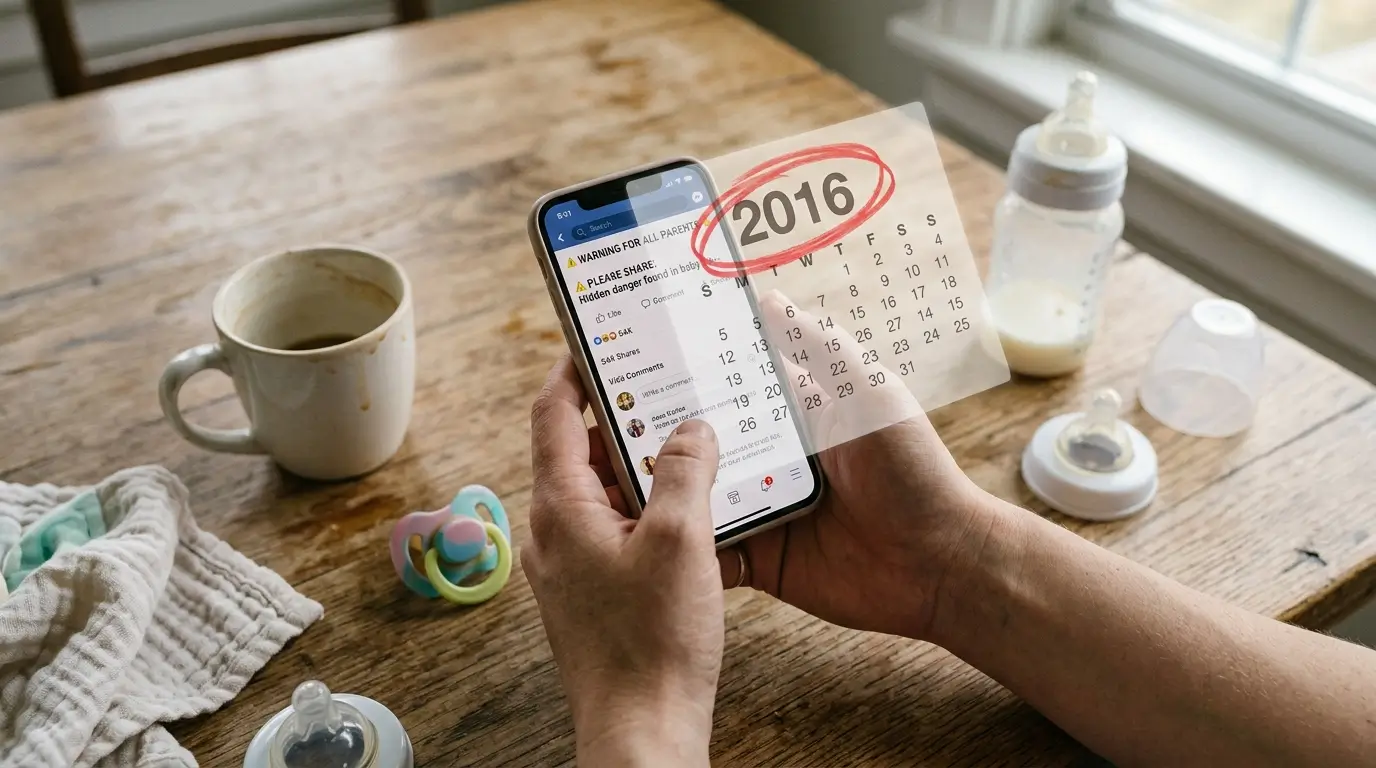
Old news recirculates constantly on social media, and parenting content is especially guilty of this. I once spent an entire evening worrying about a recalled stroller brand only to realize the recall happened in 2016. The Facebook post I saw had no date attached, and the algorithm pushed it to my feed because it matched my new “parent” demographic.
Always check the publication date on any article that triggers a strong reaction. If the piece is more than two years old, the guidelines or recommendations it references may have already changed. The AAP updates its safe sleep recommendations regularly, so a 2019 article might directly contradict what your pediatrician told you last Tuesday. Dates matter more than you think, and they take two seconds to find.
Look for the Actual Study, Not Just the Summary
News articles about parenting research almost always oversimplify the original study. When you see a headline like “Breastfeeding Boosts IQ by 10 Points,” your brain latches onto that number immediately. But the actual research paper probably included caveats about socioeconomic factors, sample demographics, and confidence intervals that the journalist skipped entirely. I started bookmarking the original studies whenever I could find them, usually linked at the bottom of the article or searchable on PubMed by title. You do not need to understand every statistical method or p-value.
Just skim the abstract and the conclusion paragraph. If the researchers themselves say the findings are preliminary or limited to a specific population, the breathless news headline is lying to you by omission. Google Scholar works well too if PubMed feels intimidating. The point is not to become a researcher yourself but to confirm that the study actually exists and says what the article claims. That one habit changed how I read everything.
Notice How the Story Makes You Feel
This one sounds soft, but it is the most practical trick I use daily. If a headline makes you feel instant guilt, fear, or outrage, pause. Content creators know that new parents are emotionally vulnerable, and they exploit that ruthlessly. Articles designed to make you feel like a bad parent are almost always selling something, whether it is a supplement, a course, or ad revenue from your panicked clicks. I keep a mental rule: if the emotion hits before the information does, the piece is probably manipulating me.
This is honestly the step in any easy news literacy guide for new parents that people skip, and it is the one that matters most. Take a breath, close the tab, and come back to it an hour later. I caught myself falling for this trick at least three times during my first month of parenthood before I finally recognized the pattern. You will almost always see the manipulation clearly once the initial wave of anxiety passes and your rational brain kicks back in.

Build a Small List of Trusted Sources You Actually Like
You do not need to read everything. In fact, trying to keep up with every parenting news outlet is a fast track to burnout and anxiety. I narrowed my list down to four sources I genuinely trust: the AAP’s HealthyChildren.org, NPR’s parenting section, The New York Times’ Well Family column, and my own pediatrician’s office newsletter.
Also Read: Best Daily News Sources for College Students 2026
That is it. When a big story breaks, I check whether any of those four outlets covered it first. If none of them did, the story is probably not as urgent as Twitter made it seem. Having a short, reliable list removes the pressure to evaluate every random link your cousin sends you at midnight. Quality beats quantity every single time, especially when you are running on three hours of sleep.
Teach Your Partner the Same Habits
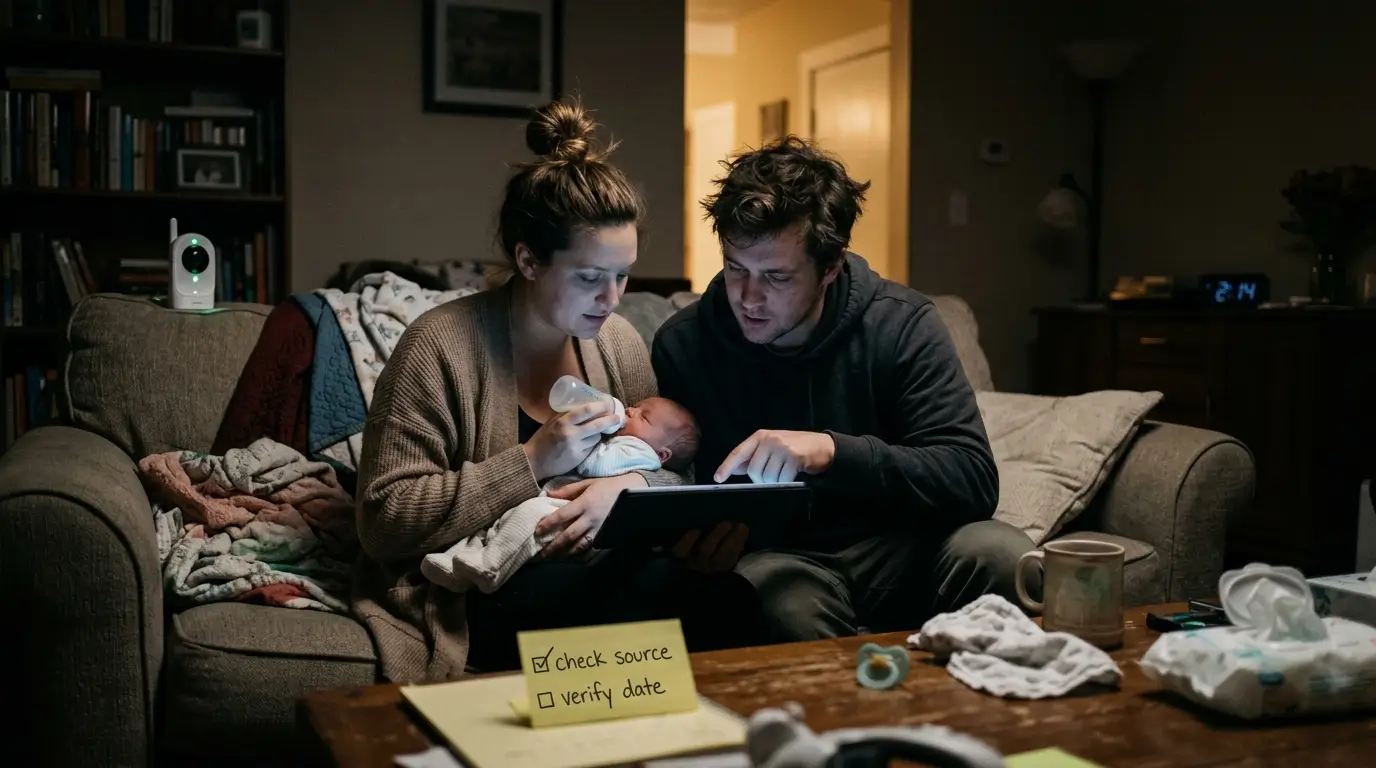
My husband once bought a $40 baby gadget because he read a single viral tweet about SIDS prevention. The product had zero FDA approval and the tweet came from an account with twelve followers. We laughed about it later, but it highlighted a real problem. News literacy only works if both parents are on the same page. Sit down together during a calm moment, maybe during a bottle feed at 2 a.m., and agree on a few basic rules. Check the source, read past the headline, and verify the date.
You do not need to turn your kitchen table into a fact-checking newsroom. Just make sure you are both filtering out the noise before it reaches your decision-making. It also helps to agree on one or two trusted sources you both check before making any big decisions about feeding, sleep, or safety. IMO, this step alone prevents half the arguments new parents have about conflicting advice.
FAQs
What age should I start teaching my kids about news literacy?
You can start modeling good habits as early as preschool by talking about where information comes from in simple terms. Formal media literacy education usually kicks in around age eight or nine, when kids start encountering content independently. The groundwork you lay now by being a critical reader yourself matters more than any lesson plan.
How do I spot fake parenting news on social media?
Look for emotional language, missing sources, and anonymous authors. Fake parenting stories often use words like “shocking” or “doctors hate this” to trigger clicks. If the post links to a website you have never heard of and the URL looks strange, skip it. Cross-check the claim on Snopes or FactCheck.org before you share.
Is an easy news literacy guide for new parents really enough?
Honestly, yes, as a starting point. You do not need a full media studies curriculum when you are surviving on cold coffee and two-hour sleep stretches. The basics, checking sources, reading past headlines, and verifying dates, will catch the vast majority of misleading content you encounter. You can always build deeper skills later.
Should I stop reading parenting news altogether?
No, but you should get selective. Staying informed about recalls, vaccine updates, and safety guidelines genuinely matters. The key is choosing a few trusted sources and ignoring the rest. Unfollowing sensationalist accounts on social media does not make you ignorant. It makes you a calmer, better-informed parent who makes decisions based on evidence.
What are the best fact-checking sites for health claims?
Snopes, FactCheck.org, and Health Feedback are my go-to picks for parenting and health claims. The WHO website also debunks common medical myths clearly. If a headline references a specific study, searching the study title on PubMed will usually tell you whether the real findings match the sensationalized version you saw on Instagram.
Conclusion
The internet will never stop throwing scary headlines at you, and that is okay because now you know how to handle them. Start with one or two of these habits this week, and you will notice the panic dial turning down almost immediately. What is the wildest parenting headline you almost believed before catching yourself?
One thought on “Easy News Literacy Guide for New Parents 2026”