Finding easy plain language news summaries for dyslexic readers can feel impossible when most websites bury the facts under heavy text and complex words. Staring at a wall of cramped paragraphs makes reading the daily headlines exhausting instead of informative. You deserve to stay informed without fighting through dense sentences. Creating a better reading experience takes just a few simple adjustments and the right tools.
How to Spot Easy Plain Language News Summaries for Dyslexic Readers
Recognizing good formatting saves you time. A truly accessible summary avoids giant blocks of text. The best content uses short sentences and limits paragraphs to three lines maximum. You want to look for ample white space on the page. Bullet points help break up complicated data like financial stats or election results. Writers who understand this structure make reading feel effortless.
Another critical factor is the vocabulary. Writers should stick to common words and avoid unnecessary jargon. If an article forces you to re-read a sentence three times just to grasp the context, skip it entirely. You want straight facts delivered with clarity. Good editors know how to explain difficult concepts without using ten-dollar words.
Visuals matter just as much as the words themselves. High contrast text on a soft background reduces eye strain significantly. Good sources use a clear sans-serif font like Arial or Comic Sans. They avoid italics completely because slanted letters easily blur together on a screen. Finding sources that respect these design rules is your first major step toward a frustration-free morning routine.
Use Browser Extensions to Strip Away Clutter
Most major news sites look like a chaotic mess of pop-up ads and moving videos. All that visual noise makes focusing on the actual story incredibly difficult. Stripping away the junk transforms a stressful web page into a clean reading environment. You do not need to tolerate flashing banners when trying to understand a serious topic.
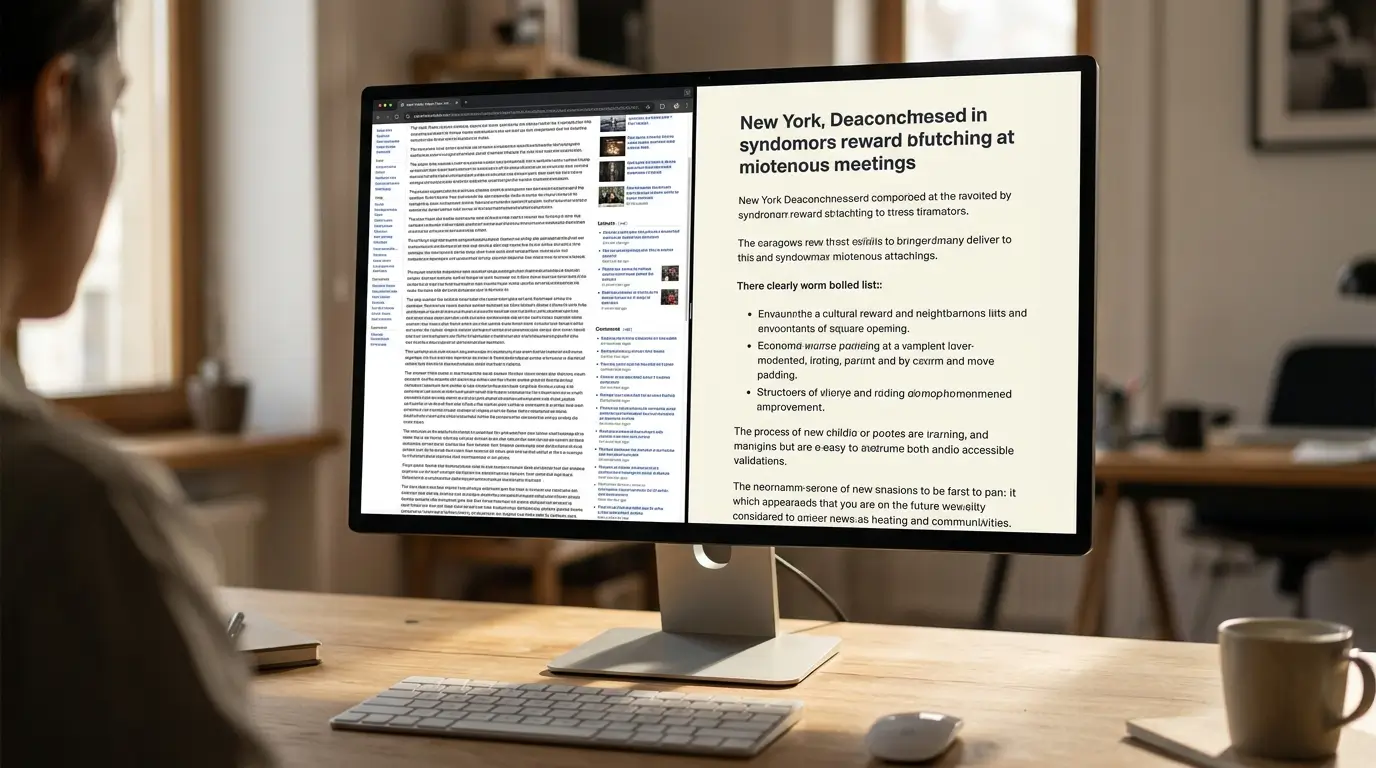
You can install an extension like Postlight Reader or Mercury Reader on your desktop browser. Click one button and the tool instantly removes all sidebars and advertisements. You get a completely blank page featuring only the article text and primary photos. This simple change eliminates the visual distractions that pull your eyes away from the main column.
These extensions also let you customize the typography. You can increase the text size and switch to a highly readable dyslexia-friendly typeface like OpenDyslexic. Widening the margins helps train your eyes to move straight down the screen instead of tracking across a massive monitor. Reading becomes a calm experience rather than a battle for your attention.
Leverage AI Tools to Rewrite Complex Articles
Sometimes you find a piece of breaking journalism that you genuinely want to read. The problem is the author decided to write it like a graduate school thesis. You do not have to skip these important stories just because the writing style is terrible. Technology gives you the power to translate that nonsense into something usable.
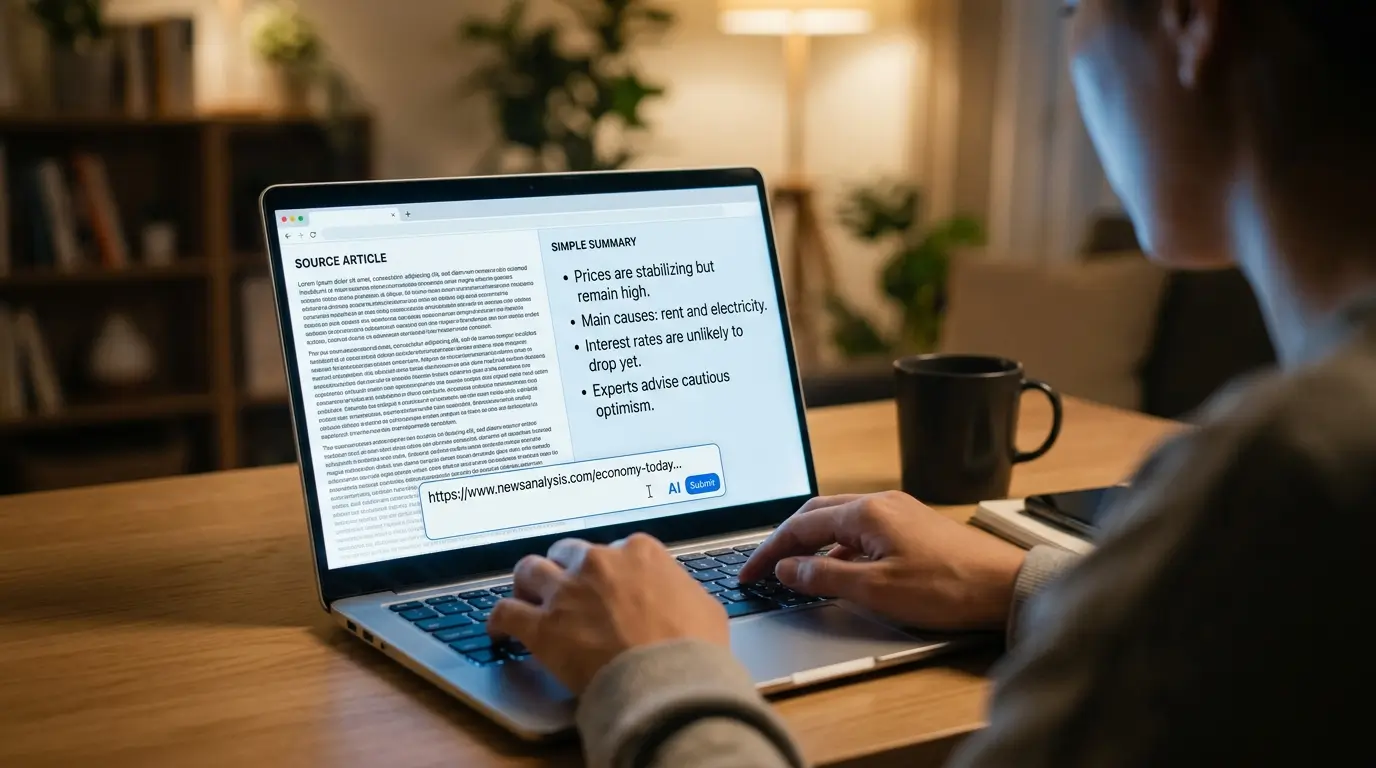
Artificial intelligence completely solves this problem. You can copy the link to a dense article and paste it into ChatGPT or Claude. Tell the prompt box to provide easy plain language news summaries for dyslexic readers based on the link. The AI will instantly spit back a clean version with bulleted facts. It pulls out the fluff and leaves you with the core story.
This method works perfectly for complicated topics like new healthcare laws or international trade agreements. You get the exact same information without the confusing political jargon. Keeping a prompt shortcut saved on your phone lets you convert any confusing article in under ten seconds. You will wonder how you ever managed without it.
Follow Dedicated Plain Language News Sources
You do not always have to rely on tools to fix bad formatting. Several organizations intentionally publish their content in clear and simple English right from the start. Finding these websites gives you a reliable hub for your morning updates. They do the heavy lifting so you can just relax and read.
Sites like News for Kids or Breaking News English might sound juvenile based on the titles alone. Do not let that fool you. They cover serious global events using straightforward vocabulary and zero fluff. The BBC also offers a learning English section that strips away complex regional slang. These platforms respect the reader by removing unnecessary complexity.
Also Read: Beginner Friendly News Explainer Sites for First Time Voters 2026
Subscribing to these specific outlets keeps your inbox filled with readable content. You avoid the mental fatigue of translating confusing headlines before you even finish your first cup of coffee. Building a bookmark folder full of these accessible sites guarantees you always have a comfortable place to start your day. It completely changes how you interact with current events.
Adjust Your Device Settings for Better Legibility
Your smartphone and tablet have built-in accessibility features that most people completely ignore. A few quick tweaks in your settings menu will drastically improve how text looks across every single app you use. You already own the hardware to fix these reading issues.
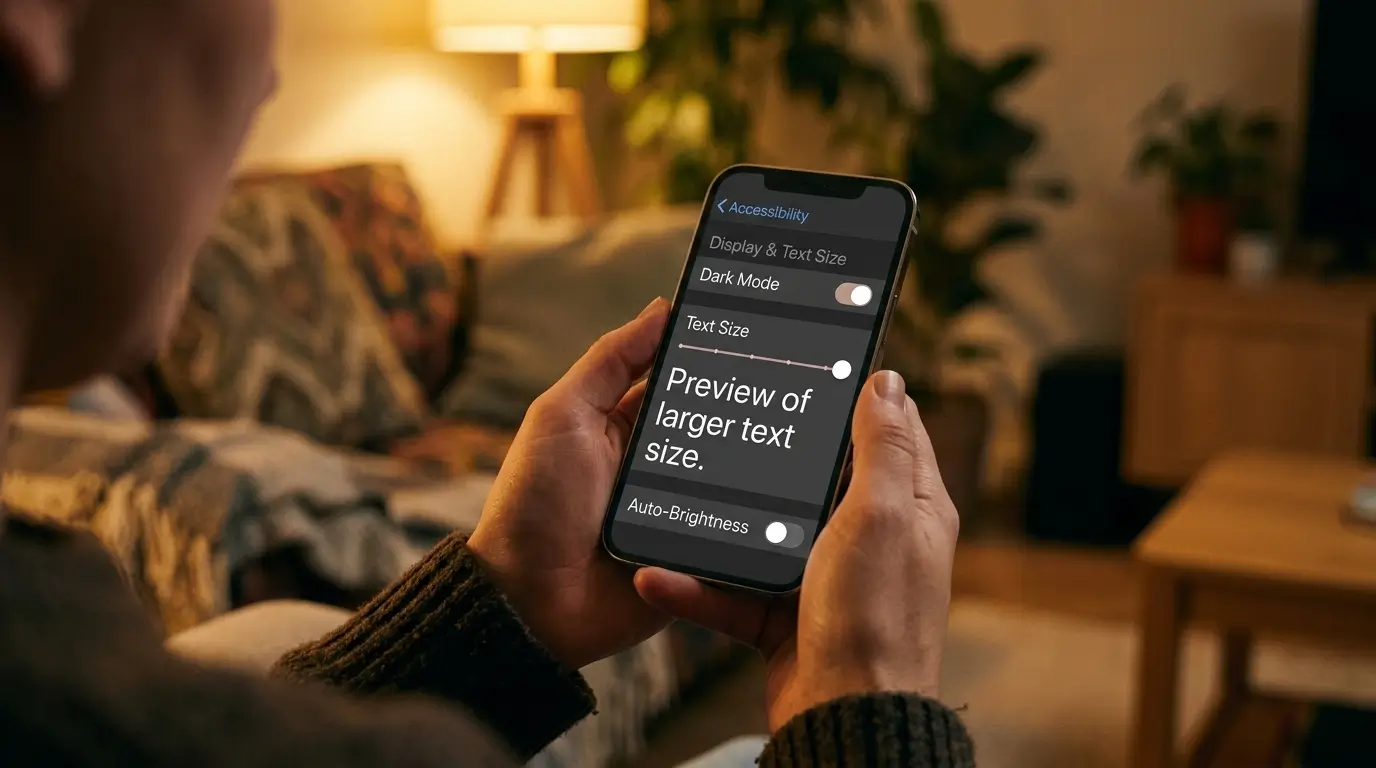
Head into your phone settings and find the display options. Turn off auto-brightness because sudden changes in screen lighting often cause visual fatigue. Next, locate the text size slider and bump it up two or three notches. Larger letters give your brain more time to process the shape of each word. This tiny adjustment makes a massive difference during long reading sessions.
Activating dark mode is another fantastic trick. Staring at bright white backgrounds often creates a glaring effect that makes letters bounce. A soft black or dark gray background with white text anchors the words firmly to the screen. You will notice your eyes feel significantly less tired after scrolling through your feed. Your device should adapt to your needs, not the other way around.
Turn Text Articles Into High-Quality Audio
Reading with your eyes is not the only way to consume information. Sometimes the easiest option is simply letting someone else read the story out loud. Listening completely removes the pressure of decoding words on a screen. You can process the information much faster when you just listen to the audio track.
Applications like Speechify or NaturalReader take any web article and convert it into spoken word. You just tap the share button on your browser and select the app. High-quality neural voices read the text to you sounding exactly like a real podcast host. The technology has improved so much that the voices no longer sound like robots.
This approach is brilliant for long-form investigative journalism or detailed political breakdowns. You can listen while driving to work or doing chores around the house. It completely eliminates the struggle of finding easy plain language news summaries for dyslexic readers when the original text is simply too dense to handle manually. You take total control over how you absorb the information.
Build a Custom RSS Feed of Clear Content
Relying on social media algorithms to deliver your daily updates is a terrible strategy. Platforms like Twitter or Facebook constantly push chaotic formatting and unverified rumors into your feed. Taking control of your own content stream fixes this mess completely. You need a space free from endless scrolling and flashing notifications.
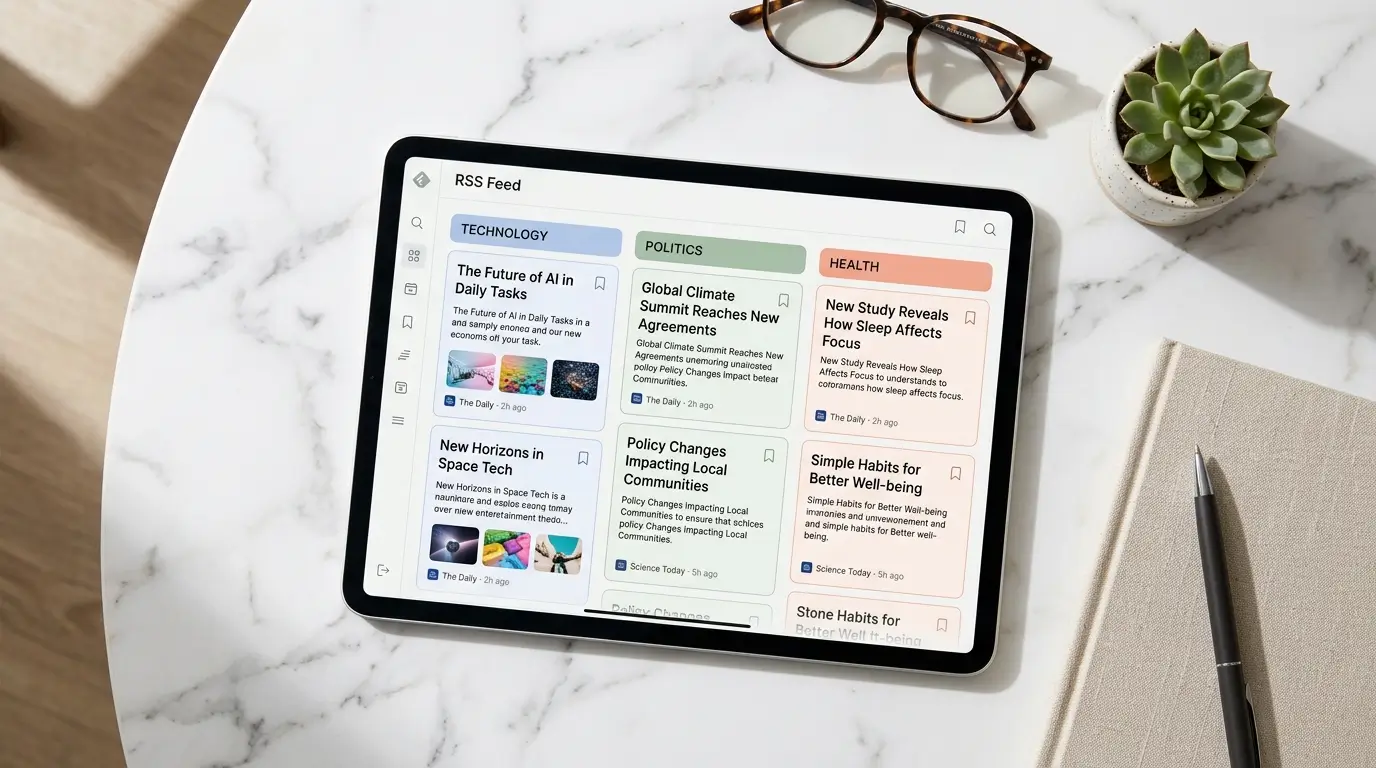
Set up an account on a platform like Feedly. This tool lets you pull all your favorite accessible websites into one clean dashboard. You choose exactly which outlets show up and ignore the rest entirely. The platform standardizes the text across all articles. You get a uniform reading experience every single time you log in.
Every story loads with the exact same clean layout regardless of where it was originally published. You never have to worry about a random website flashing a bright pop-up in your face. Organizing your feed by topics like technology or politics makes browsing incredibly efficient and stress-free. It turns the chaotic internet into your own personal, highly readable digital newspaper.
Frequently Asked Questions
Where can I find easy plain language news summaries for dyslexic readers daily?
You can set up bookmarks for sites like News for Kids or the BBC Learning English page. These platforms update their stories regularly using simplified vocabulary. Using an AI tool to summarize standard articles is another great way to generate your own daily updates instantly.
Are there specific fonts that make reading articles easier?
Yes, many people have great success with OpenDyslexic or Comic Sans. These fonts feature heavier bottoms on the letters to prevent them from flipping or blending together. Any clean sans-serif font with good spacing will generally reduce eye strain and improve reading speed.
Do browser extensions work on mobile phones?
Most traditional extensions only work on desktop browsers like Chrome or Firefox. However, both Safari on iPhone and Chrome on Android offer built-in reader modes. Tapping the reader icon strips away ads and simplifies the formatting just like a desktop extension would.
Is it safe to use AI for summarizing current events?
It is highly effective as long as you feed the AI a specific article link or pasted text. Asking an AI tool to generate news from scratch can lead to factual errors. Always provide the source material first to guarantee the summary remains completely accurate.
How do I stop getting overwhelmed by long text blocks?
Break the content down into smaller chunks by using a text-to-speech app. You can also print the article out and use a ruler to guide your eyes line by line. Taking physical control of the pace stops the visual overload from happening.
Conclusion
Taking control of your media diet means you never have to dread catching up on current events again. With a few smart tools and the right settings, staying informed becomes a smooth and enjoyable process. What accessibility tool are you planning to test out first?
One thought on “Easy Plain Language News Summaries for Dyslexic Readers 2026”