Finding a simple news reading plan for anxious readers feels impossible when every headline practically screams at you. You open an app to check the weather and accidentally absorb three global crises before breakfast. The tightness in your chest starts immediately. Ignoring the world entirely makes you feel irresponsible, but obsessively scrolling ruins your day. You need a better way to stay informed without spiraling.
How to build a simple news reading plan for anxious readers
Starting a successful routine requires brutal honesty about your current habits. Most of us casually ingest terrible information all day long through social media sidebars or browser homepages. Taking control means adding friction between you and the headlines. Delete the default media apps from your phone right now. Remove the bookmarks from your desktop browser.
You want to force yourself to type out a website address or open a specific newsletter. That tiny barrier stops the mindless scrolling loop before it begins. A good strategy depends entirely on you choosing when to engage. By clearing out the passive intake, you set a clean slate. Your brain stops anticipating constant threats disguised as breaking alerts.
You finally gain the quiet space required to decide what you actually want to read. Burying those little icons in a folder on the third page of your apps works just as well. Out of sight genuinely means out of mind.
Shut off every single push notification
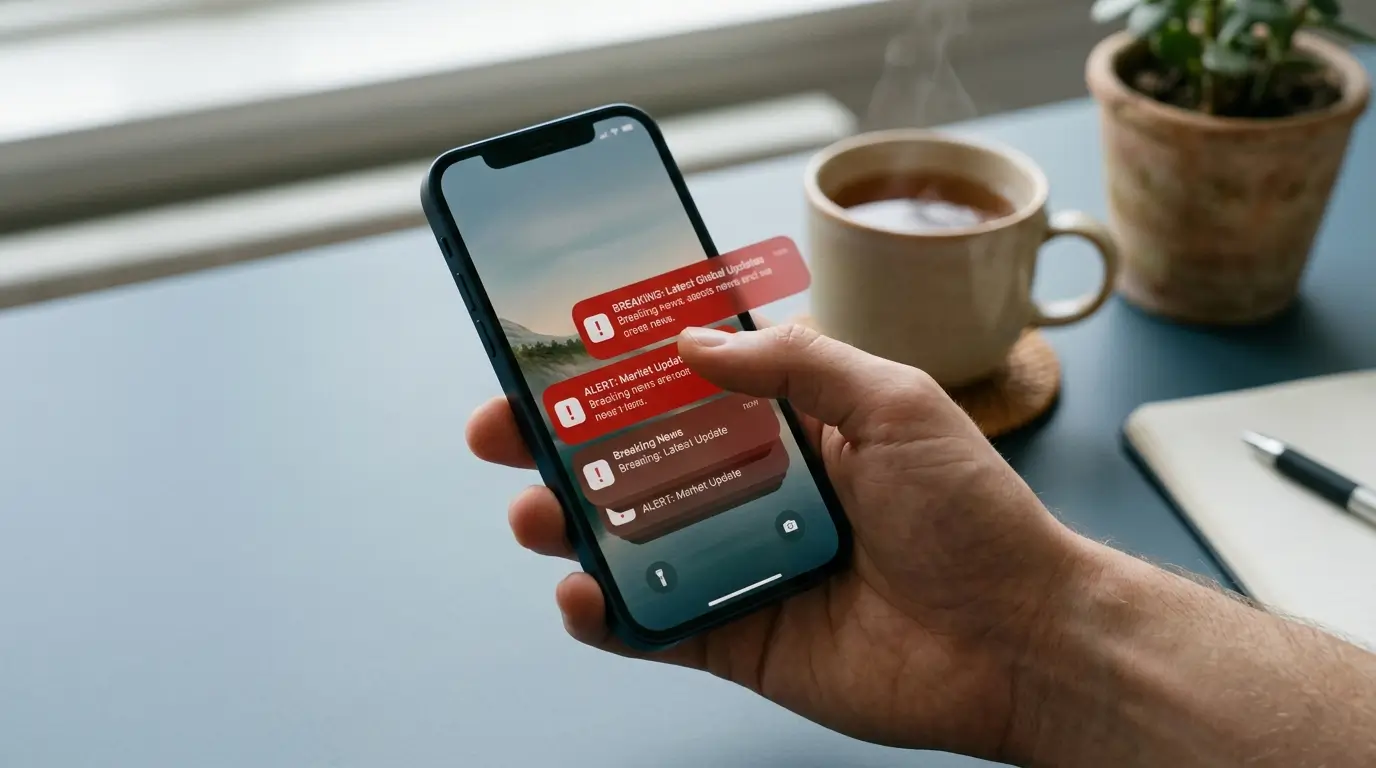
App developers intentionally design breaking news alerts to trigger an immediate adrenaline spike. Your phone buzzes, a red banner drops down, and suddenly you are panicking about a situation happening three continents away.
Developing a simple news reading plan for anxious readers starts with turning off the noise. Go into your phone settings immediately and revoke notification access for every single media outlet. You do not need to know about a crisis the exact second it happens. Very few situations require your immediate personal attention. Giving up that false sense of urgency brings massive relief. You can easily find out what happened later on your own terms.
Taking away the constant interruptions gives you back control over your emotional state throughout the workday. You stop jumping every time your screen lights up. Quiet phones create quiet minds. If something truly catastrophic happens in your own neighborhood, the emergency alert system will let you know. Everything else can wait until you are mentally prepared to read about it.
Pick boring text over flashy video clips
Television broadcasts and short video clips rely on dramatic music, urgent voiceovers, and flashing graphics to hold your attention. They want you feeling tense because tense people keep watching. Switching to purely text-based reporting strips away all that manufactured anxiety. You read the facts at your own pace. You hear your own voice in your head instead of a distressed anchor shouting over a siren. Text allows you to stop and process the information rationally.
You can skip a paragraph if it feels too heavy. You can close the tab without missing context. Video forces you along for the ride. I highly recommend finding an old-school newspaper format online and sticking to it. Keep the experience as dry and boring as possible.
The facts remain exactly the same, but the delivery method stops triggering a fight or flight response. Reading plain black text on a white background feels analytical. It engages the logical part of your brain instead of the emotional center. You walk away feeling informed rather than manipulated.
Choose a specific window for catching up
Never look at headlines right after waking up or right before going to bed. First thing in the morning sets a nervous tone for your entire day. Reading right before sleep guarantees you will lie awake staring at the ceiling for two hours. Pick a low-stakes time in the middle of your day to catch up. Lunch breaks work perfectly. You have a sandwich in one hand and a set amount of time before you have to return to work.
That built-in time limit stops you from falling down a rabbit hole. Setting a clear boundary turns consuming information into a scheduled task rather than a constant companion. You sit down, spend fifteen minutes getting the gist of the world, and then you close the tab. Keeping this habit contained prevents it from bleeding into your relaxation hours.
Your evenings should belong to you entirely. Sticking to a strict midday schedule might feel weird at first. You will reach for your phone out of habit while drinking your morning coffee. Put a book or a crossword puzzle in that spot instead.

Separate commentary from actual reporting
Opinion pieces exist to provoke a strong emotional reaction. Writers get paid to be angry, frightened, or outraged on the internet. You do not need to absorb their feelings. Stick strictly to raw reporting from wire services like Reuters or the Associated Press. These organizations focus on who, what, where, and when. They skip the dramatic predictions about how the sky is falling. Reading straight facts keeps the situation grounded in reality.
You avoid the spiraling worst-case scenarios that opinion columnists love to write about. This one change cuts out about ninety percent of the anxiety most people feel when checking their feeds. We often mistake someone else’s panic for actual events. Learning to spot the difference between an event and an opinion saves you a massive amount of mental energy.
Let the facts speak for themselves. If you see a headline telling you how you should feel about a topic, skip it entirely. You are smart enough to form your own conclusions without a pundit doing the heavy lifting for you.
Seek out constructive journalism
Mainstream media thrives on negative events because disaster attracts eyeballs. This creates a skewed vision of reality where everything feels hopeless. You can balance this by seeking out constructive journalism. Outlets like Positive News or the Solutions Journalism Network focus on how people are actively fixing problems. They report on scientific breakthroughs, community rebuilding, and environmental victories.
Also Read: Foolproof Evening News Habits For Insomnia Sufferers 2026
Adding these sources to your rotation reminds your brain that good things still happen. A solid simple news reading plan for anxious readers requires a balanced diet of information. You need to see the helpers. You need proof that humanity is not entirely doomed. Reading about solutions inspires action instead of paralysis. It proves that massive challenges have actionable answers. When you only consume tragedy, you feel powerless.
Mixing in stories of progress gives you back a sense of agency and hope. You can even sign up for weekly newsletters that strictly highlight positive global developments. Getting a designated email full of good events on a Friday morning feels like a breath of fresh air.

Restrict your social media intake heavily
Algorithms push whatever content keeps you scrolling the longest. Anger and fear are the most engaging emotions by a landslide. Using social platforms to stay informed guarantees you will face a constant barrage of terrifying content. People share the scariest interpretations of events to get likes and retweets. You must separate your social spaces from your information gathering spaces.
Unfollow every single political account, media organization, and angry commentator on your feeds. Mute keywords related to current events. Make your social platforms a place for hobby groups, funny videos, and updates from real friends. If someone you know constantly posts aggressive political rants, use the mute button without guilt. You protect your peace by curating your digital environment.
Social feeds lack context. They strip nuance away from complex situations and leave you with pure outrage. Trusting random viral posts for your daily updates is a fast track to a panic attack. Rely on professional journalists who have actual editorial standards and leave the social apps for entertainment.
Plan a physical reset immediately after
Absorbing heavy information creates a physical response in your body. Your heart rate increases. Your breathing gets shallow. You hold tension in your jaw and shoulders. You need a reliable way to burn off that sudden spike of cortisol. The moment you close your browser, do something physical. The final step of any simple news reading plan for anxious readers involves taking care of your body.
Go for a brisk ten-minute walk outside without your phone. Wash a sink full of dishes. Do some quick stretching on the living room floor. Moving your body signals to your nervous system that you are safe and the immediate threat has passed. Sitting totally still after reading about a crisis just lets the anxiety steep in your chest. Physical action breaks the mental loop.
It pulls you completely out of the digital world and drops you right back into your actual physical surroundings. You ground yourself in the present moment. Even something as simple as drinking a glass of cold water or splashing your face helps reset your system. Make this physical step a non-negotiable part of your daily routine.

FAQs
How often should I check the headlines?
Once a day is plenty for most people. Picking a single fifteen-minute window keeps you informed without ruining your mood. If an event is truly historic, you will hear about it from friends or coworkers anyway. Checking less frequently reduces your overall stress levels immensely.
What are the best sites for an anxious reader’s news plan?
Sticking to wire services provides the calmest experience. The Associated Press and Reuters offer neutral, fact-based reporting without sensationalism. Ground News is another excellent tool because it shows you how different outlets frame the same story, helping you spot obvious bias right away.
Is it okay to avoid current events entirely?
Taking a temporary break is completely fine when your mental health demands it. Stepping away for a week gives your nervous system a chance to recover. Long-term avoidance can make you feel disconnected, but brief, intentional pauses are healthy and sometimes absolutely necessary.
How do I handle friends who always talk about stressful events?
Set a firm boundary right away. You can politely tell them you are trying to limit your exposure to heavy topics for your own sanity. Most reasonable people will respect a direct request to change the subject. Protect your peace unapologetically.
Should I subscribe to daily email newsletters?
A curated email newsletter works great if it comes from a neutral source. It limits your scrolling because the email eventually ends. Just avoid newsletters focused heavily on political commentary, as those tend to stir up unnecessary outrage instead of providing clear facts.
Conclusion
Building a healthier relationship with your daily feed takes a bit of practice, but the mental clarity you gain is entirely worth the effort. You have full permission to put your peace of mind first and consume information exactly how you want. What is the one boundary you plan to set with your phone tomorrow?
3 thoughts on “Simple News Reading Plan for Anxious Readers 2026”