
Finding foolproof evening news habits for insomnia sufferers feels like an impossible task when every headline screams disaster. You clearly want to stay informed about the world, but hearing about political chaos at ten o’clock leaves you staring at the ceiling until dawn. Watching those polished anchors dissect tragedies spikes your cortisol and guarantees a sleepless night. You just need a better way to consume daily information.
1. Set A Strict Media Curfew
Start by deciding on a hard cutoff time for all current events consumption. Giving your brain at least two hours of peace before bed allows your nervous system to calm down after absorbing heavy global updates. Many people find that an eight o’clock limit works perfectly for a ten o’clock bedtime.
Enforcing this rule requires actual discipline. You have to physically step away from the television and close your laptop without checking just one more site. Setting alarms on your phone can serve as a helpful reminder that your daily viewing window has officially closed.
2. Switch To Text Summaries Instead Of Video
Visual media carries a heavy emotional weight because producers design those broadcasts to keep you hooked through commercial breaks. Reading a brief text summary strips away the dramatic background music and urgent vocal tones. This simple swap delivers the same facts without the theatrical stress.
Skimming a newsletter from a trusted outlet takes only five minutes. You still get the core details of what happened today without absorbing the anxiety of the reporters on the screen. Text-based reporting simply feels much less threatening to an already tired mind.
3. Filter Out High Trigger Topics
Certain subjects will always make your pulse race faster than others. Politics and economic crises often leave viewers feeling entirely powerless right before they try to sleep. Identifying which specific themes keep you awake is a crucial step in creating foolproof evening news habits for insomnia sufferers.
You can easily mute specific words on social media platforms or avoid the final segment of a broadcast. Giving yourself permission to skip the heavy stuff late in the day feels incredibly freeing. You are not ignoring reality by protecting your mental health before getting under the covers.

4. Watch Local Instead Of National Broadcasts
Global reporting tends to highlight massive catastrophes and existential threats that you cannot control. Local journalism usually focuses on community events, regional weather, and neighborhood updates. Shifting your attention to what is happening nearby naturally shrinks the scale of your daily worries.
Hearing about a local school board meeting feels significantly less terrifying than a breakdown in international relations. The stakes are simply lower and more relevant to your immediate life. Supporting regional journalism also keeps you grounded in your actual community instead of a chaotic global stage.
5. Listen To Mild Podcasts While Prepping Dinner
Audio formats offer a gentler way to absorb information without locking your eyes onto a glowing rectangle. Throwing on a daily update podcast while chopping vegetables separates the act of consuming facts from your bedtime routine. You finish processing the heavy information long before you even put on your pajamas.
Also Read: No-Fail News Detox Routine for Chronic Migraine Sufferers 2026
This approach turns a highly anxious activity into a casual background task. By the time you finish washing the dishes, you have caught up on the world. You can then spend the rest of the evening enjoying calming music or relaxing with your family.
6. Read Physical Newspapers After Work
Holding a physical paper forces you to slow down and interact with information at your own pace. There are no flashing graphics or breaking alerts trying to hijack your attention while you read. This tactile experience feels incredibly grounding compared to endless digital doomscrolling.
You can leave the paper on the kitchen table when you finish reading the sections you actually care about. The physical separation helps tell your brain that the update session is over. A print subscription might cost a few dollars, but the peace of mind is easily worth the price.

7. Avoid The Comment Sections Entirely
Arguing with strangers on the internet is a guaranteed way to spike your adrenaline and ruin your night. The articles themselves are usually fine, but the toxic debates underneath them will absolutely keep you awake. Scrolling down to see what other people think is always a massive mistake.
Your goal is simply to gather facts and move on with your evening. Reading angry opinions from anonymous users adds zero value to your actual understanding of the situation. Keeping your eyes away from the comment threads will save you hours of unnecessary frustration.
8. Practice Foolproof Evening News Habits For Insomnia Sufferers
Consistency is the real secret to training your body to wind down effectively. If you constantly change when and how you watch broadcasts, your brain never learns the proper signals for sleep. You must build a predictable routine that you stick to every single night.
Finding the exact foolproof evening news habits for insomnia sufferers takes a little trial and error at first. Once you figure out what keeps your anxiety low, you must fiercely protect that schedule. A structured timeline tells your nervous system that it is finally safe to relax.
9. Schedule A Dedicated Worry Time
Processing heavy global events requires actual mental space that you should not sacrifice right before bed. Giving yourself twenty minutes in the early evening to actively stress about current events prevents those thoughts from appearing later. You sit down, acknowledge the terrible headlines, and write out your fears.
When a panicky thought pops up at midnight, you can simply remind yourself that you already handled it. Pushing the stress to a scheduled window stops your brain from demanding answers in the dark. This method sounds slightly strange but works incredibly well.
10. Dim The Screen Brightness On Your Tablet
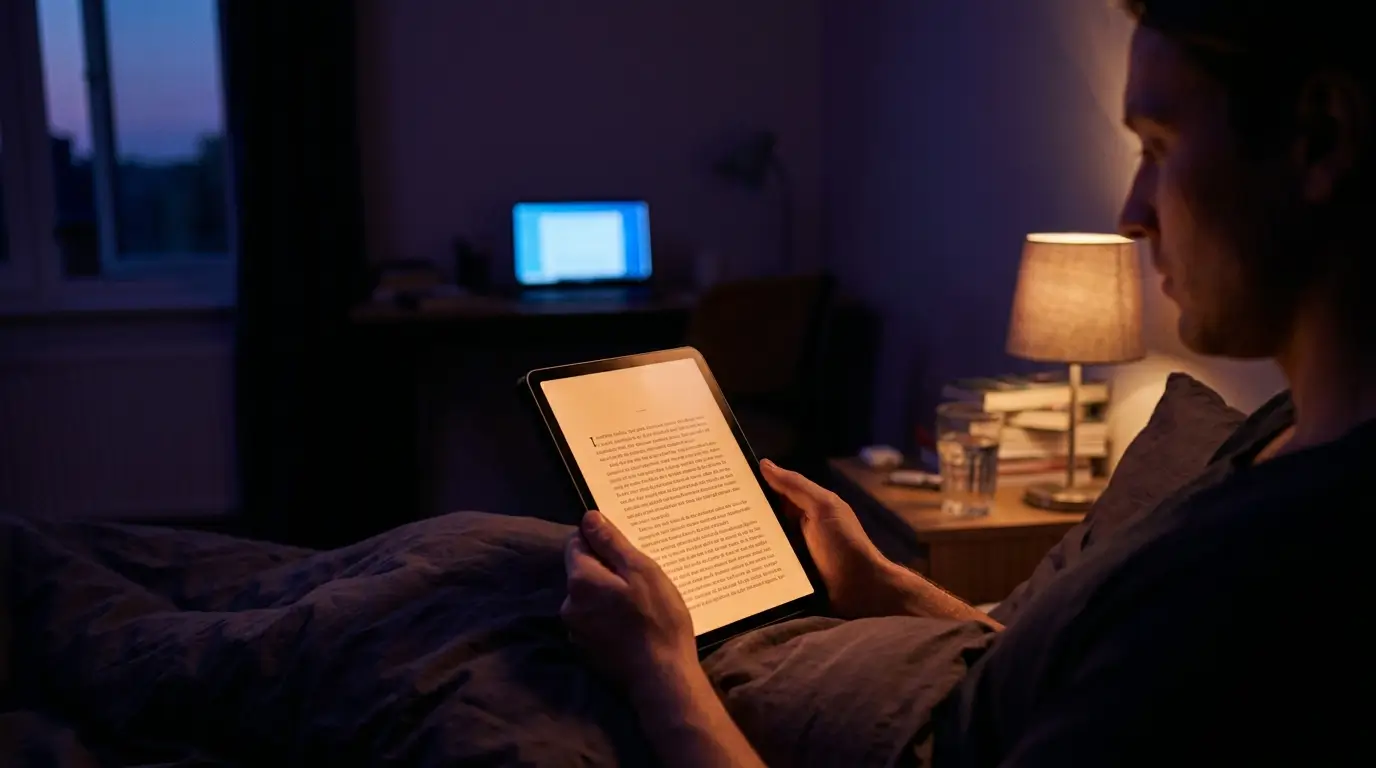
Staring at a bright screen suppresses melatonin production and tricks your body into thinking the sun is still up. If you absolutely must read updates on a device, you need to alter the visual output. Turning the brightness all the way down softens the harsh impact on your eyes.
Most modern devices also feature a warm color setting that filters out blue light after sunset. Toggling this feature on makes the screen look slightly orange but significantly reduces eye strain. Adjusting displays is a tiny physical change that makes a massive biological difference.
11. Turn Off Breaking Push Notifications
Your phone vibrating on the nightstand with an urgent alert will instantly pull you out of a relaxed state. Media companies use terrifying buzzwords in these notifications specifically to force you to click. You do not need to know about a political scandal the exact second it happens.
Digging into your settings to disable these alerts gives you back control of your attention. You can choose to check the headlines on your own terms tomorrow morning. Silencing push alerts ensures your bedroom remains a sanctuary instead of a breaking information hub.
12. Choose Morning Updates Over Nightly Recaps
Flipping your consumption schedule entirely might be the easiest fix for your sleep issues. Watching the morning broadcast over a cup of coffee gives you the entire day to process whatever happened. You carry that information with you while you work, letting the initial shock wear off completely.
By the time evening rolls around, those morning headlines feel like old history. You no longer feel the urge to check the television because you already know the main talking points. A morning routine effectively neutralizes the danger of late night anxiety spikes.
13. Follow A Gentle Palate Cleanser Routine
Building foolproof evening news habits for insomnia sufferers usually requires a gentle transition period. Watching a comforting show right after the broadcast helps wash away the serious tone of the anchors. You need something lighthearted and completely divorced from reality to reset your mood.
This deliberate palate cleanser acts like a buffer between the harsh world and your peaceful bed. Laughing at a silly joke actively lowers your heart rate and distracts you from existential dread. A comedy series forces your brain to switch tracks before you even try to close your eyes.
14. Keep Electronics Out Of The Bedroom Entirely
Bringing your laptop into bed to read just one more article is a terrible habit that ruins sleep hygiene. You should associate your mattress strictly with rest, not with absorbing global conflicts and stock market crashes. Leaving the devices in the living room creates a physical boundary that you cannot easily cross.
Buying a cheap analog alarm clock eliminates the excuse of needing your phone nearby for the morning. When you wake up in the middle of the night, you will not have the option to check the headlines. A tech-free bedroom is truly the ultimate defense against doomscrolling.

15. Track Your Sleep Quality Against Broadcast Times
Keeping a simple log of when you watch television and how well you sleep provides undeniable proof of what works. You might think a quick ten-minute update at nine o’clock does no harm, but your log might reveal a pattern of waking up at three in the morning. Developing foolproof evening news habits for insomnia sufferers means relying on actual data.
Jotting down your viewing patterns in a notebook takes roughly thirty seconds every morning. Seeing the correlation written out in your own handwriting makes it much harder to ignore. Tracking sleep gives you the concrete motivation needed to finally change your late night behavior.
Frequently Asked Questions
Why does watching current events keep me awake?
Exposing your brain to highly stressful information immediately triggers a fight or flight response. Your body releases adrenaline and cortisol, which act as alert mechanisms for your survival. This natural biological reaction makes it physically impossible to fall asleep quickly, even when you feel exhausted.
What are the best evening news habits for insomnia sufferers who work late?
Shift workers should rely on audio summaries during their commute home rather than turning on the television. Listening to a quick recap in the car satisfies your curiosity without bringing bright screens into your house. You can then spend your actual winding down time relaxing.
Should I completely stop reading about current events?
Ignoring the world entirely is rarely a realistic or necessary solution. The goal is simply changing how and when you consume this heavy information. Moving your reading time to your lunch break allows you to stay perfectly informed without sacrificing your essential rest later that night.
Can blue light glasses help if I read on my phone?
Wearing specialized lenses will definitely reduce the harsh glare and limit eye strain before bed. However, they do absolutely nothing to block the stressful content of the articles you are reading. The emotional toll of the stories will still cause sleeplessness regardless of what eyewear you use.
How long does it take to fix my sleep schedule?
Most people notice a significant difference within a week of setting strict media curfews. Your nervous system needs a few days to trust that the nighttime routine is genuinely safe and predictable. Sticking to your new rules consistently will speed up this recovery process tremendously.
Conclusion
Taking control of your nighttime routine requires a little discipline, but the reward of uninterrupted rest is absolutely worth the effort. You deserve to close your eyes without the weight of the entire world pressing down on your chest. What tiny change are you going to make tonight to protect your peace?
2 thoughts on “Foolproof Evening News Habits For Insomnia Sufferers 2026”