Finding a reliable way to stay informed feels impossible, which is why you need a no-fail news source checklist for indecisive readers. You open an app, see a flood of terrifying headlines, and immediately close it. I used to cycle through endless subscriptions, never actually reading any of them. We all want to know what is happening globally without feeling completely overwhelmed by bias and noise.
1. Identify your true reading capacity
Many people subscribe to five different major papers and read exactly zero of them. You have to be honest with yourself about how much time you actually have before adding anything to your phone. I spent years paying for an expensive daily paper just to feel smart. I never even opened the app. FYI, forcing yourself to read heavy financial breakdowns just looks cool but offers zero personal value.
Creating a solid no-fail news source checklist for indecisive readers starts with timing your current scrolling habits. If you only have ten minutes while drinking coffee, a dense investigative site will just gather digital dust. You need bite-sized summaries instead. A common mistake is buying premium subscriptions right away. Stick to free tiers or open-access sites first to see if the format even clicks with your brain. Knowing your limits stops the guilt cycle of unread articles piling up in your inbox.

2. Pick one primary aggregator for neutral headlines
Your next move requires finding a plain, boring place to check the basic facts. The best way to dodge sensationalism is to use a wire service like Reuters or the Associated Press. These organizations literally sell their reporting to other outlets, so they skip the dramatic adjectives. I check the AP News app once a day around noon. It gives me a clean list of what happened without anyone telling me how to feel about it.
Also Read: Simple News Reading Plan for Anxious Readers 2026
Relying on social media algorithms for updates is a massive mistake. Platforms prioritize outrage because it drives engagement. Going straight to a wire service bypasses the spin completely. You get the raw data on global events, business, and tech. I highly recommend keeping this specific app icon on your first home screen page. Wire services provide the factual foundation you need before reading opinion pieces anywhere else.
3. Choose a deep-dive publication for weekend reading
Skimming headlines only gets you so far before you crave actual context. You should pick one long-form outlet that produces thoughtful, heavily researched features. Publications like The Atlantic or long-read tech blogs offer the depth missing from daily breaking updates. I usually save two big articles on Friday to read slowly on Saturday morning. Sitting down with a hot coffee and a long article feels incredibly rewarding compared to frantic scrolling.
Having one trusted source for deep dives prevents you from bouncing endlessly around the internet looking for analysis. You want a site that takes weeks to report a story instead of rushing to be first. A huge trap is trying to follow multiple magazines at once. You will just end up with piles of unread issues on your coffee table or a clogged bookmark bar. Contextual journalism works best when you actually have the mental space to digest it.
4. Audit your bias using a no-fail news source checklist for indecisive readers
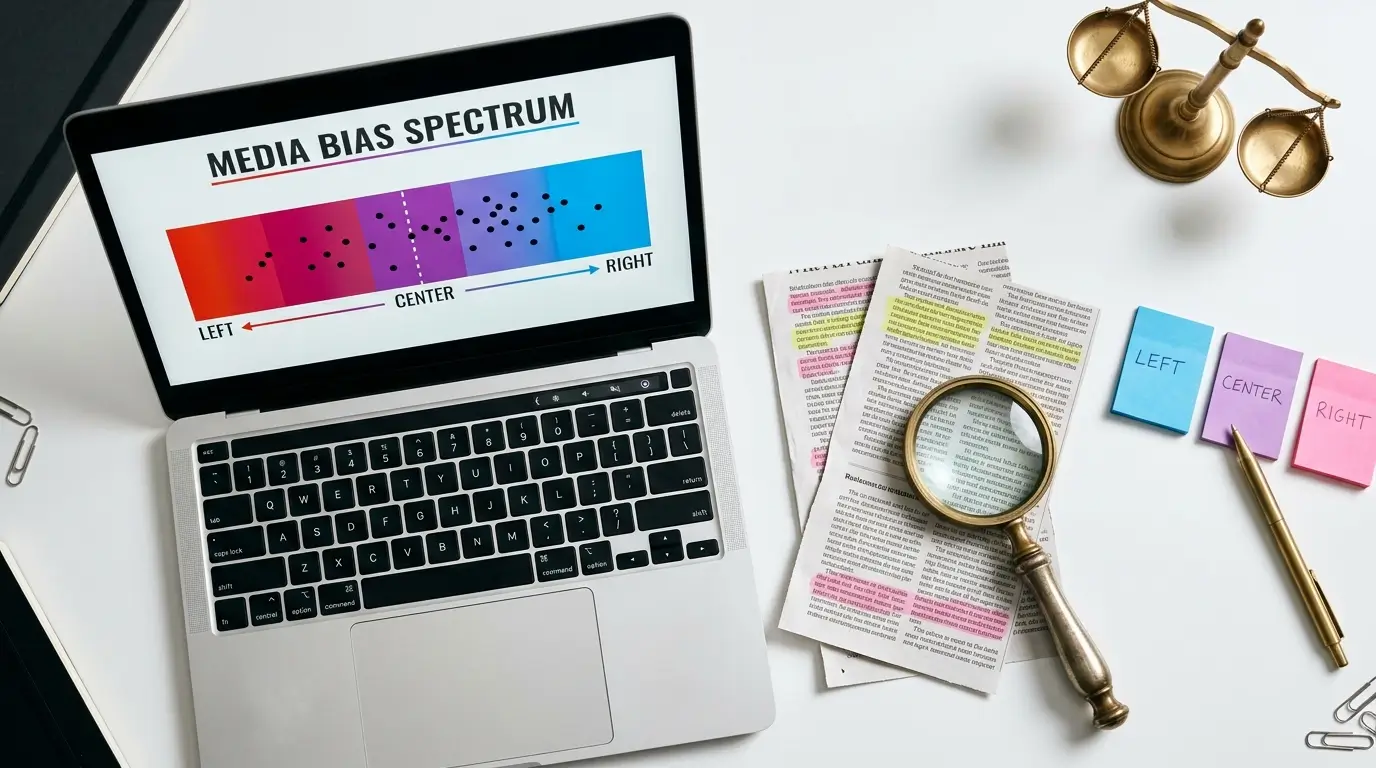
Checking the political leaning of your chosen outlets is non-negotiable. You can use tools like AllSides or the Ad Fontes Media Bias Chart to see exactly where a publication sits on the political spectrum. This action removes the guesswork from media consumption. I always cross-reference new sites before handing over my email address. It completely changes how you interpret controversial topics online.
Every writer has some level of personal bias. The goal is not finding a perfectly neutral robot, but rather understanding the lens through which a story is told. Reading a heavily skewed site without realizing it warps your worldview incredibly fast. Try pairing a right-leaning financial paper with a left-leaning social commentary magazine to balance your perspective naturally. A media bias chart keeps you grounded in reality.
5. Cut out the toxic push notifications
Turning off breaking alerts on your phone instantly lowers your daily anxiety. Very few events require your immediate attention the second they happen. I used to let three different apps buzz my pocket every time a politician tweeted, which completely ruined my focus at work. Go into your settings right now and toggle them all off. You will notice a massive improvement in your mood almost instantly.
Allowing alerts forces you into a reactive state all day. You start jumping from one crisis to the next without any time to process the information. It makes every minor update feel like a global catastrophe. If an emergency genuinely affects your local area, you will hear about it through official city channels or friends anyway. Relying on scheduled checking puts you back in control of your attention span.
6. Subscribe to a single morning newsletter
Curated emails are incredibly helpful for people who hate navigating cluttered homepages. A good morning brief drops the five biggest stories right into your inbox with a little bit of witty commentary. Popular options exist that condense complex topics into conversational paragraphs. I personally rely on a niche tech newsletter that tells me exactly what I need to know before breakfast. It feels like getting a text from a smart friend rather than reading a textbook.
Newsletters do the heavy lifting of aggregation for you. They filter out the fluff and highlight the actual takeaways. The biggest error you can make here is subscribing to ten different lists. Your inbox will become a graveyard of unopened mail. Pick one that matches your industry or general interests and unsubscribe from the rest mercilessly. Curated emails solve the paradox of choice perfectly.
7. Separate opinion columns from hard reporting
Recognizing the difference between a factual report and an editorial is a crucial skill. Many websites blend these two formats together to keep you scrolling longer. A major part of testing any no-fail news source checklist for indecisive readers is making sure you actually separate facts from feelings. You must actively look at the tags at the top of an article to see if it says “Opinion” or “Guest Essay” before taking it as gospel. I once argued a point at a dinner party based entirely on an op-ed I mistook for front-page reporting. It was highly embarrassing.
Opinion writers are paid to provoke a reaction. Their job is to stir the pot and present a strong argument, not necessarily to list objective facts. Blurring these lines leads to unnecessary stress and skewed beliefs. Always verify the basic facts of a story through a neutral wire service before getting angry over an editorial take. Categorizing editorial content properly keeps your emotional response in check and saves you from sounding foolish in professional conversations.
8. Re-evaluate your media diet every three months
A crucial part of maintaining a no-fail news source checklist for indecisive readers is recognizing that your needs will shift. What served you perfectly last year might feel like spam today. Set a calendar reminder to review your subscriptions and bookmarks quarterly. I recently realized a podcast I listened to daily had shifted into pure clickbait, so I finally deleted it from my feed.
Pruning your digital inputs keeps your mind sharp and prevents stagnation. You might find that a publication you loved has changed editors and lost its quality. Or maybe you need more financial updates because you started investing. Cancel auto-renewals on paid sites you no longer read and swap them out for fresh perspectives. Why pay for content you actively ignore? A quarterly audit guarantees your reading habits remain intentional instead of accidental.
9. Commit to a designated stopping point
Doomscrolling happens when you lack a clear exit strategy for your reading sessions. You need to decide exactly when you are done absorbing information for the day. I set a strict rule to stop reading political and global updates after dinner. It dramatically improved my sleep quality and stopped me from arguing with strangers online at midnight. Sleep always matters more than the latest hot take on the internet.
The internet provides an infinite scroll of content designed to keep you trapped. If you do not create an artificial finish line, the platforms will happily consume your entire evening. Try reading a physical newspaper or an e-reader that does not have a web browser attached. Once you finish the edition, the session is officially over. Establishing a hard cutoff protects your mental health from the endless twenty-four-hour cycle.

FAQs
Why do I need a no-fail news source checklist for indecisive readers?
Having a set system stops you from freezing up when looking at endless subscription options. It gives you a clear framework to filter out sensationalism and focus only on platforms that respect your time. You save money and reduce daily stress dramatically.
Are free wire services actually reliable?
Yes, organizations like the Associated Press and Reuters are the gold standard for factual reporting. They supply basic facts to thousands of other websites globally. Reading them directly ensures you get the raw data before someone else adds a spin to the story.
How many newsletters should I subscribe to?
Keep it down to just one or two at maximum. Any more than that turns your inbox into a chaotic mess that you will actively avoid opening. Choose one morning summary that covers global events and perhaps a weekly wrap-up for your specific industry.
What is the best way to handle breaking alerts?
Turn them completely off right now. Constant interruptions destroy your focus and artificially inflate your stress levels. Important global events will still be there when you choose to open your designated app. Local emergencies are better handled by official weather or city notification systems anyway.
Can I completely avoid media bias?
Every human writer brings some personal perspective to their work, so pure neutrality is impossible. Your goal is simply identifying where an author stands before absorbing their arguments. Balancing a few highly rated, slightly biased platforms gives you a much healthier view of complex issues.
Conclusion
Taking control of your daily information diet feels incredibly freeing once you stop letting algorithms make the choices for you. Stick to your chosen platforms for a few weeks and watch how much your daily anxiety drops. What app are you planning to delete first?
2 thoughts on “No-Fail News Source Checklist For Indecisive Readers 2026”